The Enemies of Peptide Stability
Before discussing storage protocols, it is important to understand what causes peptides to degrade:
- Temperature: Heat accelerates chemical reactions, including hydrolysis and oxidation, breaking down peptide chains.
- Moisture: Lyophilized powders are highly hygroscopic (they absorb water from the air). Introduction of moisture triggers premature breakdown.
- Light: Ultraviolet (UV) light can cause photo-oxidation, particularly in peptides containing light-sensitive amino acids like Tryptophan (Trp), Tyrosine (Tyr), or Phenylalanine (Phe).
- Oxygen: Exposure to atmospheric oxygen can lead to the oxidation of Methionine (Met) and Cysteine (Cys) residues.
Proper Storage Temperatures for Lyophilized Peptides
The storage temperature is dictated by how soon the researcher intends to reconstitute and utilize the peptide.
Short-Term Storage (Up to 1 Month)
If the lyophilized peptide is scheduled for use within the next 3 to 4 weeks, standard laboratory refrigeration is sufficient.
- Ideal Temperature: 2°C to 8°C (36°F to 46°F).
- Protocol: Keep the vial in its original, sealed packaging. Ensure the refrigerator maintains a consistent temperature and is not subject to frequent door openings that cause temperature spikes.
Long-Term Storage (1 Month to 2+ Years)
For extended storage, lyophilized peptides must be frozen to halt degradative chemical processes.
- Ideal Temperature: -20°C (-4°F) is generally sufficient for most peptides for 1 to 2 years.
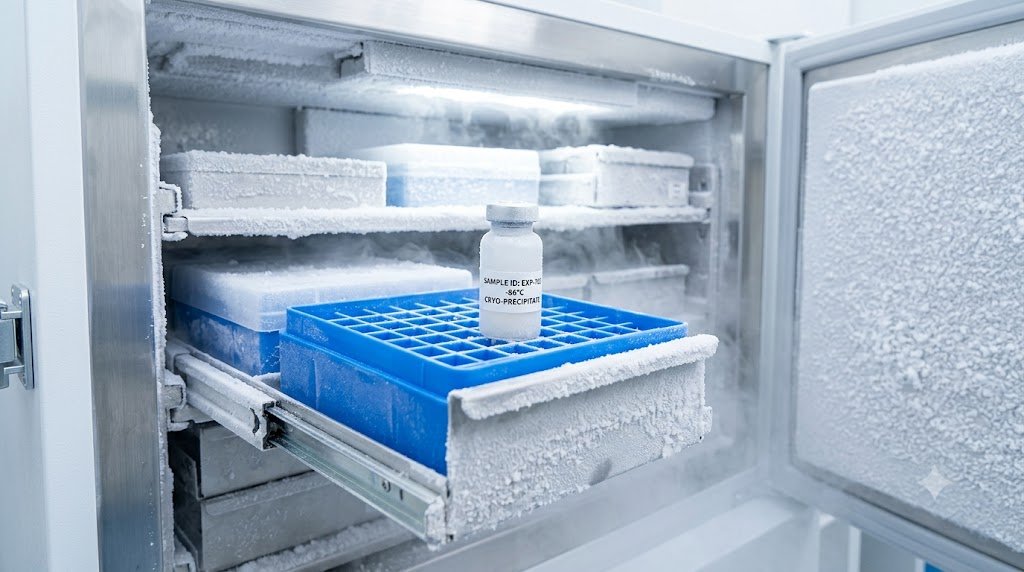
- Deep Freeze: For maximum stability extending beyond two years, storage at -80°C (-112°F) in an ultra-low temperature (ULT) freezer is highly recommended.
- Protocol: Ensure the vial is tightly sealed. It is often beneficial to store the vials inside a sealed secondary container containing a desiccant pack to eliminate ambient moisture.
Crucial Handling Practices: Avoiding Condensation
One of the most common mistakes in peptide handling occurs when transferring a vial from a cold environment to room temperature.
If a cold vial is opened immediately in a humid laboratory, moisture from the ambient air will instantly condense on the cold lyophilized powder inside the vial. This condensation introduces water, rapidly accelerating degradation and potentially ruining the sample before reconstitution even begins.
The Golden Rule of Thawing: Always allow the sealed peptide vial to equilibrate to room temperature (typically 30 to 60 minutes) before breaking the seal or puncturing the stopper.
Storage After Reconstitution
Once a peptide is reconstituted with a diluent (such as Bacteriostatic Water), its stability timeline changes drastically.
- Never freeze a reconstituted peptide. The freezing and thawing process creates ice crystals that cause mechanical shear stress, shattering the delicate peptide bonds.
- Reconstituted peptides must be stored in a refrigerator at 2°C to 8°C.
- Even with Bacteriostatic water, most reconstituted peptides should be utilized within 3 to 4 weeks to ensure experimental accuracy.
By adhering to these rigorous storage protocols, researchers can protect their investments and ensure the validity of their in-vitro data.
For laboratories requiring the highest standard of purity, StratagenLab offers carefully handled, HPLC-verified research peptides. Visit our Shop to learn more.