The Importance of Proper Reconstitution
When procuring research peptides from a reputable Canadian supplier like StratagenLab, they typically arrive in a lyophilized (freeze-dried) state. Lyophilization removes water under a vacuum, resulting in a stable powder that can endure shipping and extended storage.
Before these peptides can be utilized in cellular assays, animal models, or in-vitro experiments, they must be returned to a liquid state—a process known as reconstitution. Proper reconstitution is critical; incorrect handling, improper solvent selection, or aggressive mixing can denature the delicate peptide bonds, rendering the compound useless for research.
Step-by-Step Guide to Reconstituting Peptides
1. Gather Your Materials
Ensure you are working in a sterile environment (ideally under a laminar flow hood) to prevent contamination of your research materials. You will need:
- The lyophilized peptide vial.
- The appropriate diluent/solvent (e.g., Bacteriostatic Water or Sterile Water).
- Sterile syringes and needles.
- Alcohol prep pads.
2. Prepare the Vials
- Allow the lyophilized peptide vial to reach room temperature before opening to prevent condensation from forming inside the vial, which can degrade the peptide.
- Remove the plastic flip-caps from both the peptide vial and the diluent vial.
- Swab the rubber stoppers of both vials with an alcohol pad and allow them to air dry.
3. Draw the Diluent
- Using a sterile syringe, draw the predetermined volume of diluent. If you are unsure of how much diluent to use to achieve your desired concentration, utilize a Peptide Reconstitution Calculator.
4. Introduce the Diluent to the Peptide
- Insert the needle into the center of the peptide vial’s rubber stopper.
- Crucial Step: Do not spray the diluent directly onto the fragile peptide powder. Instead, angle the needle so the liquid slowly drips down the inner side of the glass vial.
- Allow the vacuum inside the peptide vial to pull the liquid in. If there is no vacuum, inject the liquid very slowly.
5. Dissolve the Peptide
- Never shake the vial. Shaking causes foaming and mechanical shear stress, which can easily denature the peptide chains.
- Instead, gently swirl or roll the vial between your fingers until the lyophilized powder is completely dissolved. The resulting solution should be perfectly clear. If cloudiness persists, the peptide may require a different solvent (such as a tiny amount of acetic acid for highly basic peptides).
Determining Concentration
Calculating the correct concentration is vital for accurate dosing in experimental models. The formula is straightforward:
Total Peptide Mass (mg) / Total Volume of Diluent (ml) = Concentration (mg/ml)
For example, if you reconstitute a 5mg vial of TB-500 with 2ml of Bacteriostatic water:
- 5mg / 2ml = 2.5mg per 1ml.
Best Practices for Reconstituted Peptides
- Once reconstituted, the stability of the peptide decreases significantly.
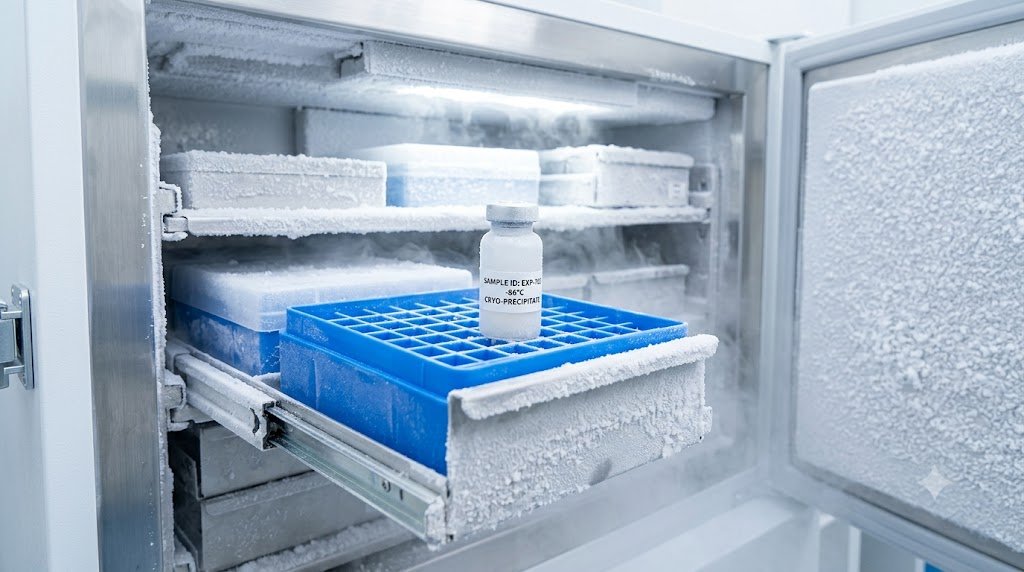
- Store all reconstituted peptides in a refrigerator at 2°C to 8°C (36°F to 46°F).
- Avoid repeated freeze-thaw cycles, as this degrades the structural integrity of the peptide.
By following these protocols, researchers can ensure the viability and accuracy of their in-vitro studies. StratagenLab provides 99%+ HPLC-tested, lyophilized peptides to support rigorous scientific inquiry.
For precision laboratory materials, explore the StratagenLab Shop.
Disclaimer: The following information is intended strictly for educational and scientific purposes. The products discussed are for in-vitro and laboratory experimentation only. They are not approved for human consumption.