Introduction to BPC-157
Body Protection Compound-157 (BPC-157) is a synthetic pentadecapeptide consisting of 15 amino acids. It represents a partial sequence of a naturally occurring protective protein found in human gastric juice. In recent years, BPC-157 has garnered significant attention within the scientific community due to its observed pleiotropic effects in various experimental models, particularly concerning tissue repair, angiogenesis, and cellular protection.
For researchers sourcing peptides in Canada, understanding the precise mechanisms through which BPC-157 operates at the cellular level is crucial for designing robust experimental protocols.
Angiogenesis and the VEGF Pathway
One of the most widely documented mechanisms of action for BPC-157 is its interaction with angiogenic pathways. In-vitro studies suggest that BPC-157 significantly promotes the formation of new blood vessels (angiogenesis).
Research indicates that BPC-157 upregulates the expression of Vascular Endothelial Growth Factor (VEGF) and its receptors (such as VEGFR2). By modulating the VEGF pathway, BPC-157 accelerates endothelial cell proliferation and migration. In laboratory assays, endothelial cells treated with BPC-157 have demonstrated an increased capacity to form capillary-like tubes, a fundamental step in the angiogenic process.
Furthermore, BPC-157 appears to interact with the Nitric Oxide (NO) system. It acts as a modulator, protecting endothelial function by maintaining NO synthesis balance, which is vital for vascular tone and cellular homeostasis during experimental stress conditions.
Modulation of Fibroblast Activity and Collagen Synthesis
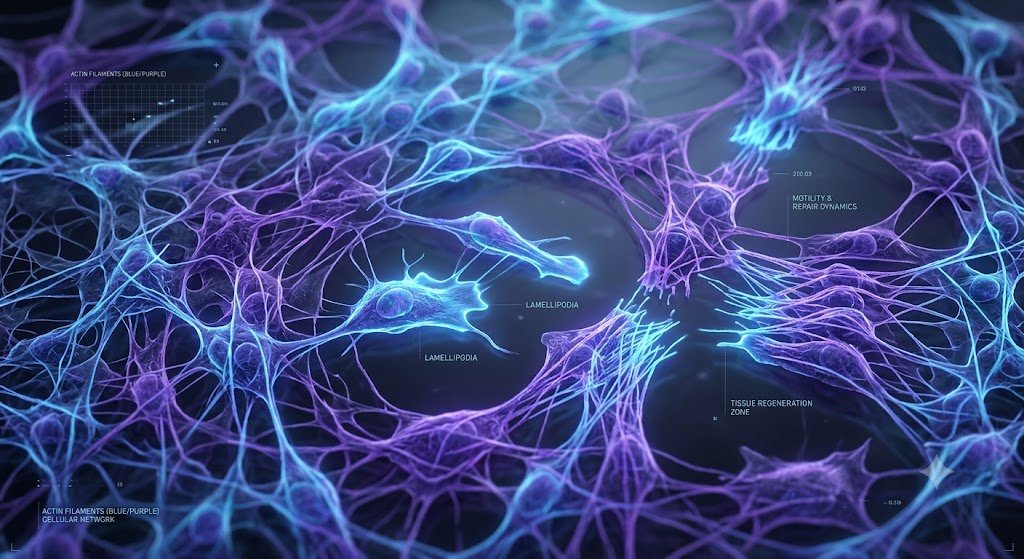
In tissue repair models, particularly those involving tendons and ligaments, BPC-157 has been observed to influence fibroblast behavior. Fibroblasts are the primary cells responsible for synthesizing the extracellular matrix and collagen.
In-vitro findings highlight that BPC-157 enhances the survival, migration, and proliferation of tendon fibroblasts. It achieves this, in part, by activating the FAK (Focal Adhesion Kinase) and paxillin pathways. The activation of these signaling cascades facilitates cellular motility and the organized deposition of collagen, providing a molecular basis for the accelerated tendon healing observed in animal models.
Neuroprotective Mechanisms
Emerging research is investigating the potential neuroprotective effects of BPC-157. While the exact pathways are still being elucidated, studies utilizing neuronal cell cultures suggest that BPC-157 may protect against various neurotoxic insults.
The proposed mechanisms include:
- Protection of the Dopaminergic System: BPC-157 has been shown to mitigate the effects of neurotoxins in experimental models of Parkinson’s disease.
- Serotonergic Modulation: It influences serotonin synthesis in specific brain regions, which may relate to its observed effects on behavior and stress responses in animal subjects.
- Reduction of Oxidative Stress: By upregulating antioxidant enzyme activity and decreasing reactive oxygen species (ROS) production, BPC-157 enhances cellular viability under ischemic or toxic conditions.
Conclusion
The mechanism of action of BPC-157 is multifaceted, involving the modulation of growth factors (like VEGF), interaction with the nitric oxide system, and the activation of specific intracellular signaling pathways (such as FAK/paxillin). As research continues, these in-vitro and animal models provide a vital foundation for understanding how this synthetic peptide interacts with complex biological systems.
For laboratories requiring high-purity, third-party tested materials for their investigations, StratagenLab offers premium, strictly quality-controlled BPC-157 for research purposes.
Visit our Research Peptides Catalog to source 99%+ HPLC-tested compounds for your laboratory.