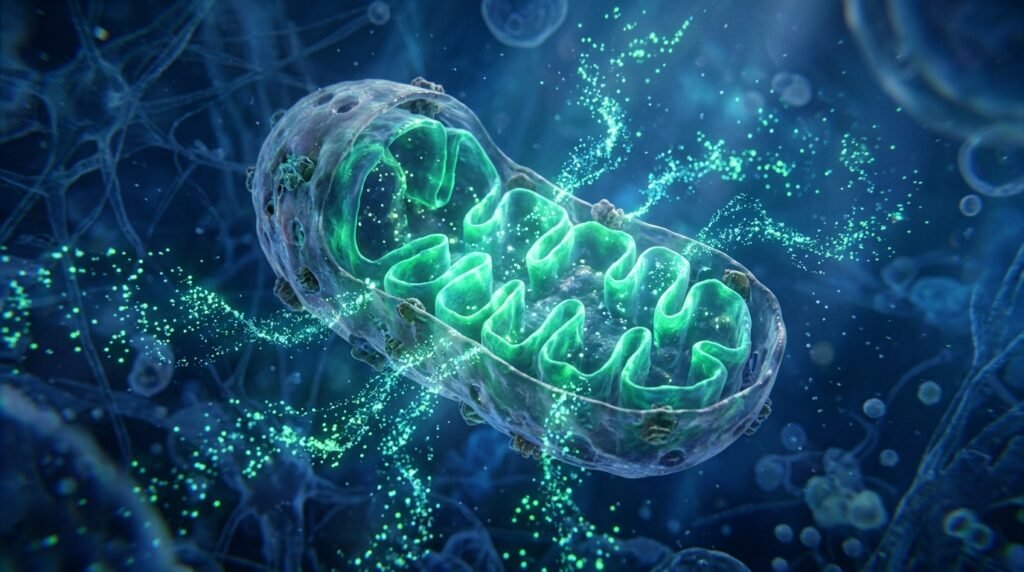

In the evolving landscape of metabolic biochemistry, single-receptor and dual-receptor incretin mimetics have laid foundational groundwork for studying glycemic regulation and energy homeostasis. However, the advent of triple hormone receptor agonists—led by the investigational compound retatrutide—marks a distinct paradigm shift in laboratory inquiry.
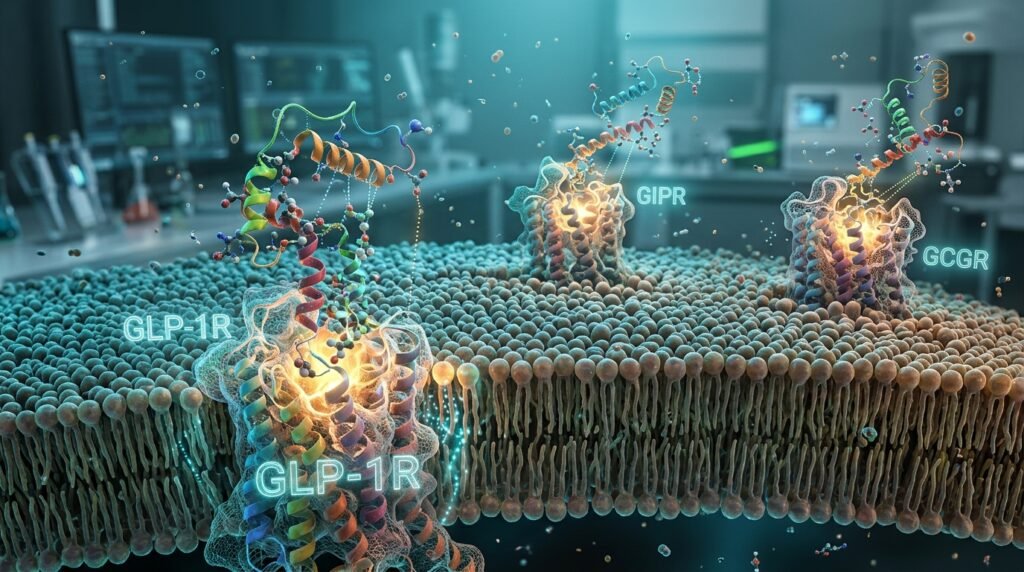
Retatrutide is an engineered 39-amino-acid peptide designed to elicit simultaneous agonism across three distinct G-protein coupled receptors (GPCRs): glucagon-like peptide-1 (GLP-1), glucose-dependent insulinotropic polypeptide (GIP), and the glucagon receptor (GCGR). Investigating this triple-pathway synergy offers researchers critical insights into multi-receptor cross-talk, substrate oxidation, and cellular energetics.
Traditional peptide models often encounter ceiling effects when targeting a single signaling cascade. Retatrutide overcomes these limitations by integrating complementary, non-overlapping endocrine pathways:
                  ┌──► GLP-1 Receptor ──► Satiety Signaling & Glycemic Control
                  │
Retatrutide (LY) ─┼──► GIP Receptor   ──► Adipocyte Lipid Buffering & Insulin Sensitivity
                  │
                  └──► Glucagon Rec.  ──► Hepatic Substrate Oxidation & Energy Flux
At the cellular level, GLP-1 receptor activation engages intracellular adenylate cyclase via $G_{\alpha s}$ protein coupling, increasing cyclic adenosine monophosphate (cAMP) levels. In pancreatic $\beta$-cell models, this stimulates glucose-dependent exocytosis of insulin granules while simultaneously modulating central autonomic signaling centers in the hypothalamus.
While early research characterized GIP primarily as an incretin, dual- and triple-agonist models reveal its potent buffering role. In adipose tissue assays, GIP receptor signaling moderates the potential gastrointestinal stress linked with isolated GLP-1 activation, stabilizes postprandial lipid storage, and promotes balanced nutrient partitioning.
The inclusion of glucagon receptor engagement distinguishes retatrutide from dual agonists like tirzepatide. In isolated hepatocyte models, controlled glucagon signaling stimulates:
Retatrutide’s peptide sequence incorporates structural modifications that optimize half-life and balance affinity across its three target receptors. A C20 fatty diacid moiety conjugated via a hydrophilic linker enables stable binding to serum albumin, shielding the sequence from rapid enzymatic cleavage by dipeptidyl peptidase-4 (DPP-4).
| Target Receptor | Relative In-Vitro Potency vs. Native Ligand | Primary Signaling Cascade |
| GIP Receptor | ~3.9× higher potency | cAMP accumulation, insulinotropic synergy |
| GLP-1 Receptor | ~0.3×–0.5× potency | cAMP / PKA signaling, delayed gastric transit |
| Glucagon Receptor | ~0.4× potency | cAMP elevation, hepatic glycogenolysis & lipid oxidation |
(Data derived from preclinical competitive binding and cAMP accumulation assays in cell lines expressing human recombinant receptors.)
Because retatrutide contains a conjugated fatty diacid chain, its steric volume requires deliberate handling during preparation:
Disclaimer: This article is intended strictly for educational and scientific research purposes. Retatrutide is an investigational compound designated solely for in-vitro laboratory experimentation and is not approved for human or veterinary consumption.


Augue Sed viverra nulla Interdum mia bibendum velit sapien usop scelerisqu ictum quam tincidunt nec feugiat augue tincidunt Etiam pretium diam rhoncus. gida turpis cursus. Nuncsed fringilla tortor iaculis eget tincidunt accumsan ullamcorper.